

ORLANDO, Fla. — Florida remains one of the country’s top relocation destinations, but new migration data suggests the state’s once-breakneck growth is beginning to cool as housing costs and insurance prices reshape where Americans are choosing to go next.
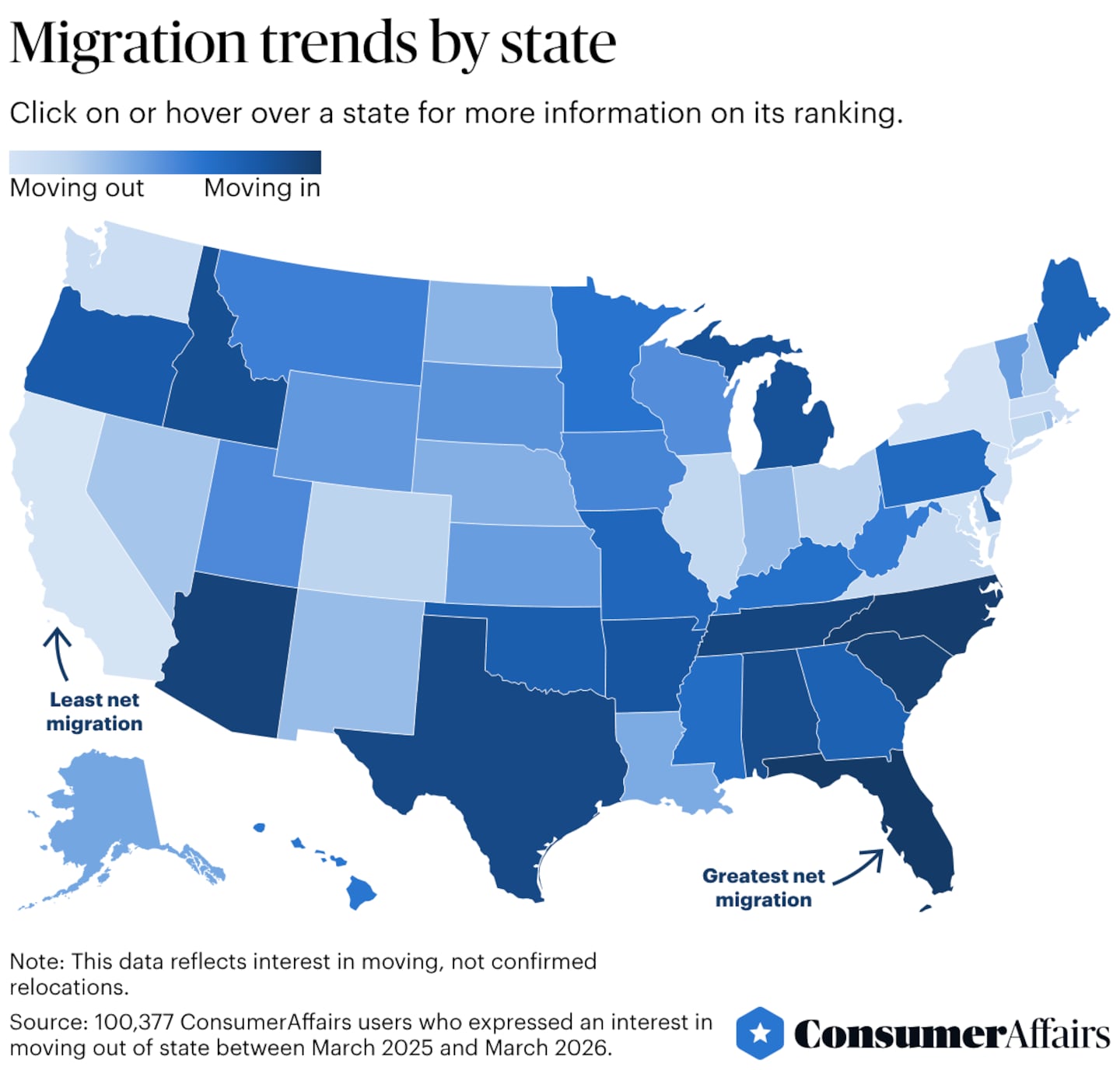
A new analysis from ConsumerAffairs ranks Florida fourth nationally for net migration interest, behind North Carolina, South Carolina and Tennessee. The report examined more than 122,000 users researching moves between March 2024 and March 2025 and compared how many people were looking to move into each state versus how many were considering leaving.
For years, Florida has been one of the clearest winners in America’s migration shift, drawing retirees, remote workers, young professionals and higher-income households from states such as New York and California.
But this year’s data shows another Southern competitor gaining momentum: Tennessee overtook Florida for the No. 3 spot, while the Carolinas continue leading the country in inbound interest.
The reason, analysts say, is that Florida’s own affordability advantage is getting harder to maintain.
ConsumerAffairs notes Florida’s net domestic migration dropped by more than 49% between 2022 and 2023, even though the state continues to post strong population gains compared with much of the country.
One major factor is housing.
Florida home prices remain far above pre-pandemic levels, and insurance has become one of the state’s biggest cost pressures. ConsumerAffairs cites data showing Florida now has the highest homeowners insurance costs in the country, averaging nearly $9,500 annually, with some counties seeing rates more than double since 2021.
That is changing the migration equation, especially for middle-income families who once viewed Florida as a lower-cost alternative to Northeastern and West Coast states.
Even so, Florida’s pull remains powerful because several long-standing advantages have not changed: no state income tax, warm weather, strong retirement appeal and continued job growth in metro areas such as Orlando, Tampa and Miami.
The migration story is also evolving by who is moving.
Recent wealth migration data shows Florida continues attracting higher-income households at a rate unmatched nationally, with billions in adjusted gross income flowing into the state from other parts of the country.
South Florida in particular has become a magnet for affluent newcomers, especially from New York, although many are choosing to rent instead of buy as they wait to see where housing prices settle.
At the same time, newer migration patterns suggest younger workers are increasingly looking at cities like Orlando as growth markets, especially as remote and hybrid work continue reshaping where people can live.
Nationally, the broader trend still favors the South.
ConsumerAffairs found nearly 46% of all prospective interstate movers are targeting Southern states, making it by far the country’s strongest migration region.
The biggest states losing residents remain California and New York, where high housing costs continue pushing people outward. California posted the largest migration loss in the report, with more than 7,300 more people looking to leave than move in. New York ranked second.
For Florida, the takeaway is clear: the state is still winning the migration battle, but the easy growth era may be over.
The next question is whether Florida can keep attracting new residents while also becoming affordable enough for them to stay.
Click here to download our free news, weather and smart TV apps. And click here to stream Channel 9 Eyewitness News live.

©2026 Cox Media Group